
The Three Materials You'll Actually Be Choosing Between
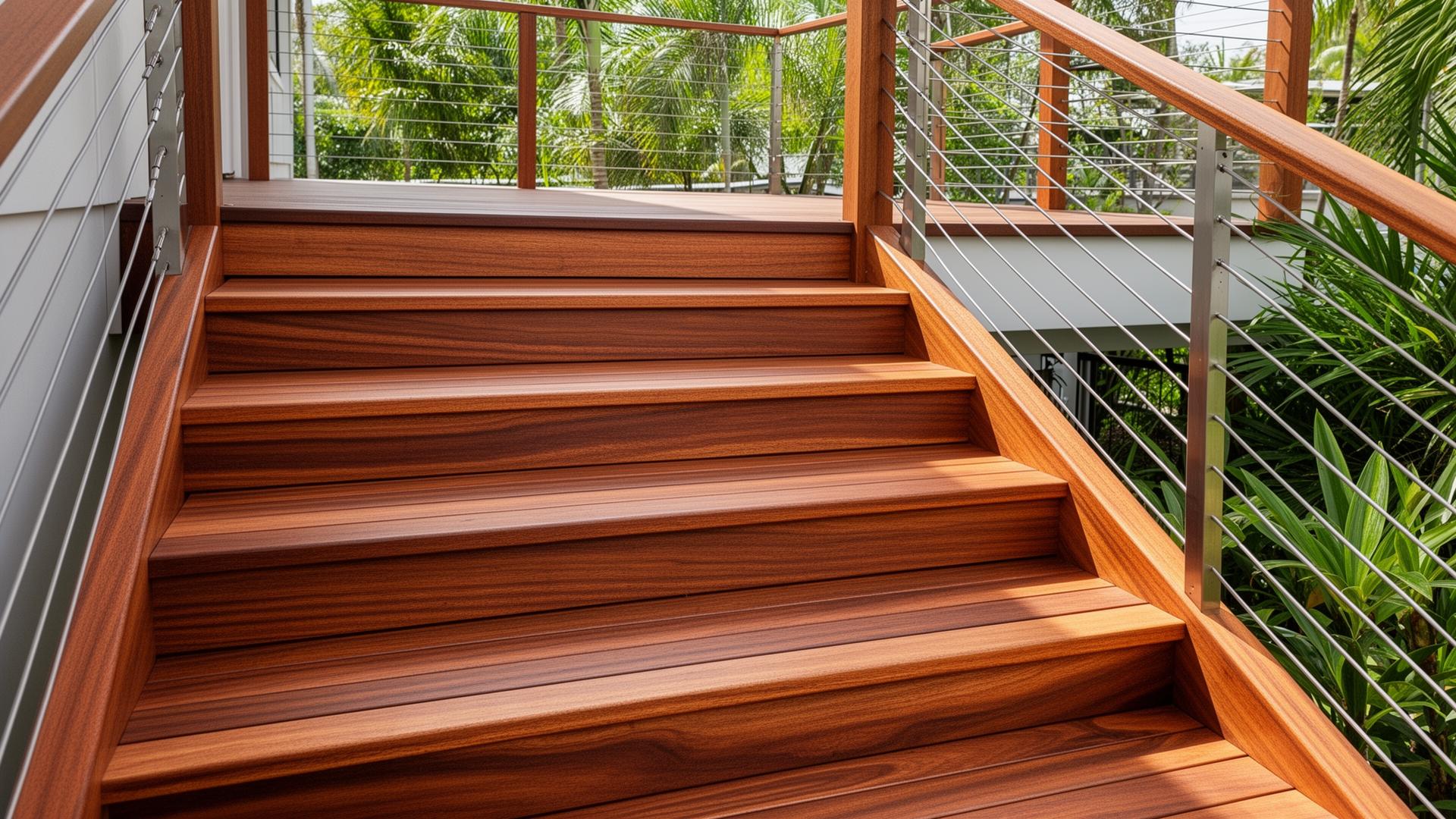
Hundreds of species and products exist, but 95 % of Brisbane outdoor stair jobs come down to three options: Australian hardwood, treated pine, or composite decking boards (used as stair treads).
Here's how they stack up side-by-side.
Spotted Gum and Other Australian Hardwoods
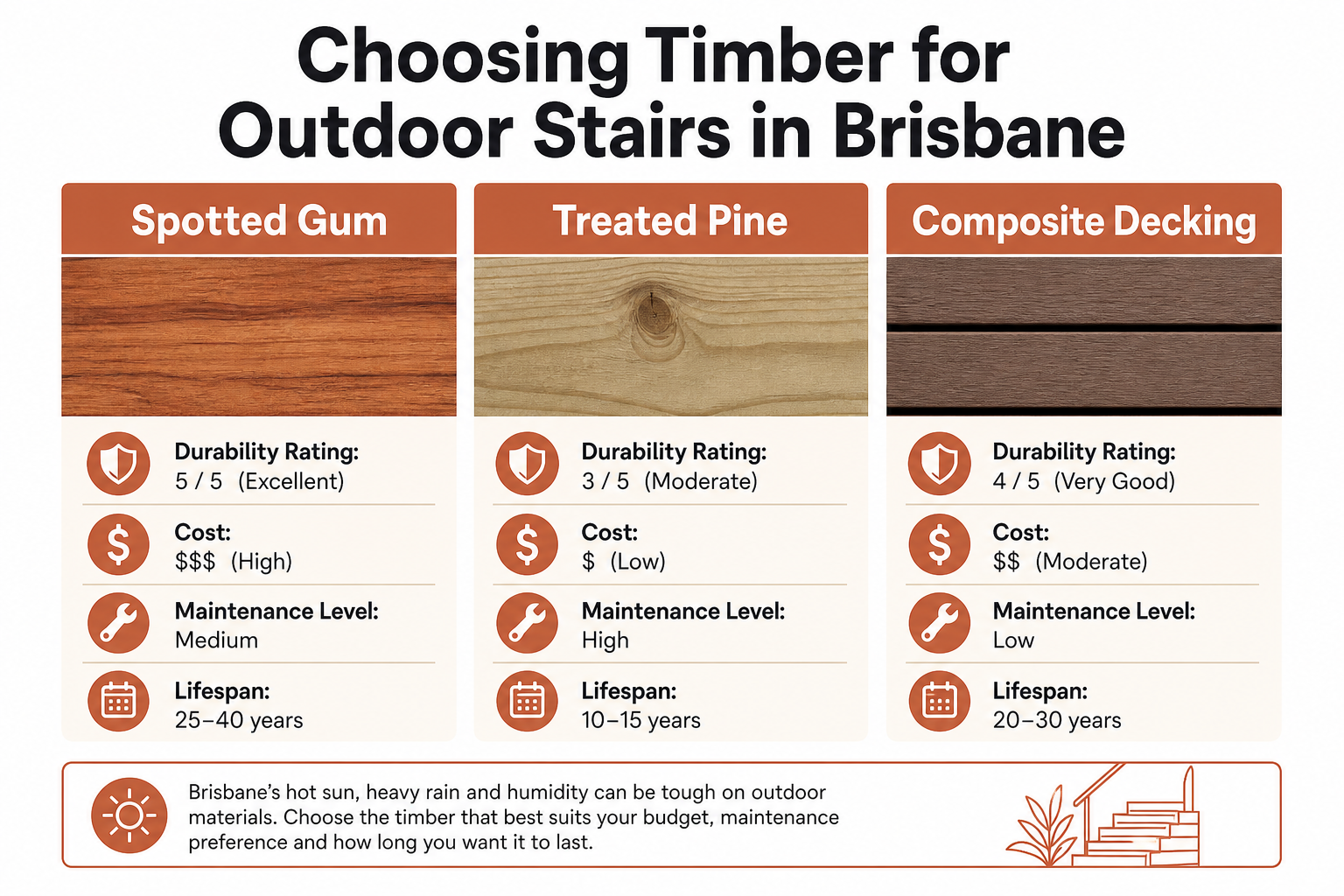
Spotted gum, blackbutt, ironbark and turpentine are the workhorses of outdoor stair construction in Brisbane. They're dense (around 950–1100 kg/m³), naturally durable and develop a beautiful silver patina if left unsealed.
The premium price buys real lifespan. A properly installed spotted gum staircase will easily outlast the deck it's attached to.
- Pros: 25–40 year lifespan, beautiful grain, naturally termite-resistant, holds value at resale.
- Cons: Higher upfront cost, heavier to install, occasional re-oiling needed to keep the rich colour.
- Best for: Front entries, Queenslanders, premium decks, anywhere the stairs are seen from the street.
Treated Pine — The Budget Workhorse
H4 treated radiata pine is the most affordable option and perfectly legitimate when budget is tight. It's pressure-treated with copper-based preservatives to resist rot and termites, and it accepts paint beautifully.
The catch? Pine is soft. Treads dent under heels and furniture, and you'll be repainting every 3–4 years to keep weather out of the end-grain.
- Pros: Cheapest option, easy to paint, widely available, fast to install.
- Cons: Softer surface, shorter lifespan, regular repainting required, looks tired faster.
- Best for: Rental properties, hidden side-of-house stairs, painted-finish heritage homes.
Composite Decking as Stair Treads
Capped composite boards (Trex, Modwood, NewTechWood) are a relatively new option for stair treads. They're made from recycled wood fibres and HDPE plastic, so they don't rot, splinter or need sealing.
Composite is great where ongoing maintenance is a problem — investment properties, holiday homes on the Sunshine Coast, anywhere unattended for months at a time. But it can't carry the same load as solid hardwood, so a robust timber sub-frame is essential.
- Pros: Zero sealing/oiling, won't splinter, consistent colour, 20–30 year warranties common.
- Cons: Plastic look up close, gets hot underfoot in summer, needs hardwood structural support beneath.
- Best for: Low-maintenance lifestyles, coastal properties, pool surrounds.
Which Material Should You Choose for Your Brisbane Stairs?
Here's the short version we give clients on-site:
- 01Front entry of a home you'll own long-term → spotted gum or blackbutt.
- 02Painted-finish Queenslander or budget-conscious side stairs → H4 treated pine.
- 03Holiday home, rental or low-maintenance lifestyle → composite treads on a hardwood frame.
- 04Restoring a heritage home → match the original species (usually hardwood).
Get a Quote on Your Outdoor Timber Stairs
Whatever timber you choose, the build quality matters more than the brand on the invoice. Carpentry Worx is QBCC licenced and has been building outdoor stairs across Brisbane, Moreton Bay and the Sunshine Coast for years. See our external stairs service page or request a quote today.
Need a Hand From a Brisbane & Sunshine Coast Carpenter?
Carpentry Worx is QBCC licenced and servicing Brisbane North, Moreton Bay and the Sunshine Coast. Get a quote on your project today.
Useful Links
Related Articles
- External StairsQueenslander Stairs Restoration: A Brisbane Owner's GuideOriginal Queenslander stairs are gorgeous — and often quietly rotting. Here's how to restore them safely, sympathetically and to current code.Read article
- External StairsTimber Stair Treads: The Complete Buying GuideStandard sizes, species, profiles and prices — everything you need to know before ordering timber stair treads for your Brisbane build.Read article
- External StairsWhat Determines the Cost of External Stairs in Brisbane?A working carpenter's guide to what drives external stair costs in Brisbane — the specification choices that matter, where you can save, and what a fair quote looks like.Read article
- External StairsStair Balustrade Regulations in Queensland — Plain EnglishConfused by 865 mm, 1000 mm and 125 mm? Here's exactly what the National Construction Code requires for stair balustrades in Queensland — and where homeowners trip up.Read article