
The Four Numbers Every Queensland Homeowner Should Know
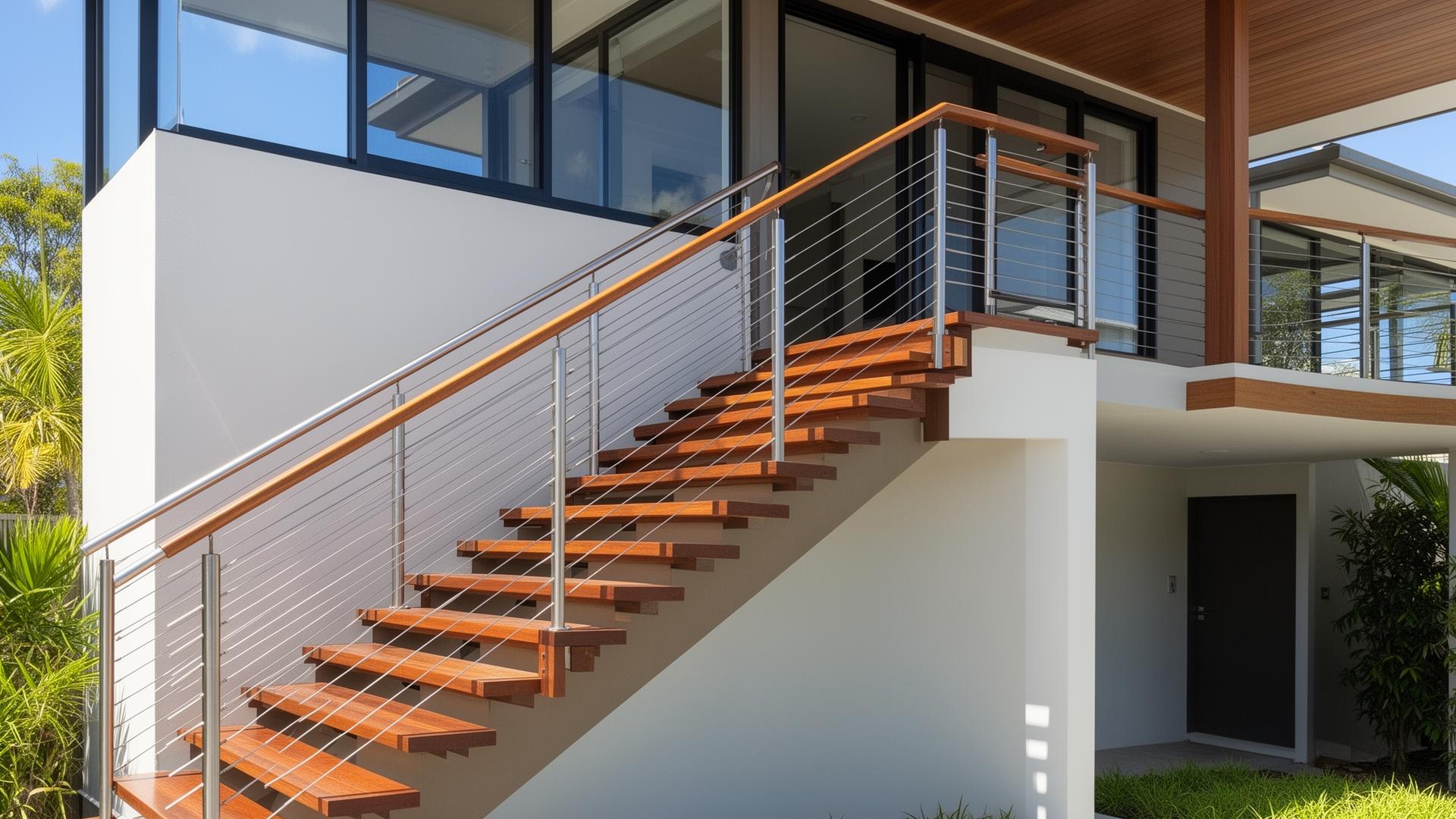
Most stair balustrade compliance comes down to four key dimensions. Get these right and you'll satisfy the vast majority of inspectors.
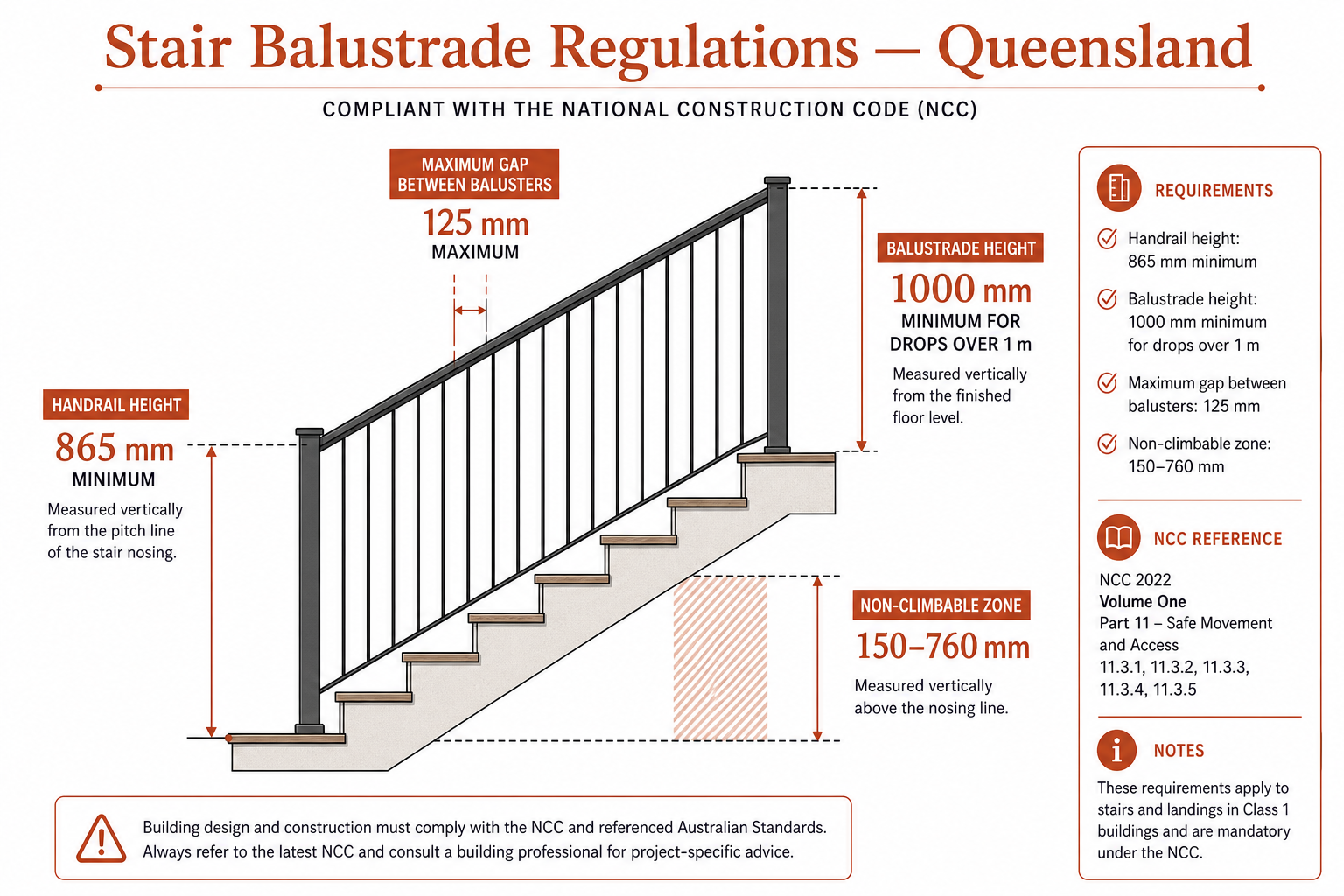
Handrail Height: 865 mm Minimum
The top of the handrail must sit at least 865 mm above the nosing pitch line — the imaginary line drawn through the tips of each tread. Many heritage handrails sit at 800–820 mm and need lifting before sale.
You can't just slide the handrail up — the balusters must lengthen with it, or you'll lose the non-climbable zone (more below).
Balustrade Height: 1000 mm Minimum (for Drops Over 1 m)
Where the stair or landing has a fall of more than 1 m, the top of the balustrade must be at least 1000 mm above the finished floor or landing. This applies to virtually every high-set Queenslander.
For drops under 1 m, the handrail height (865 mm) is sufficient — no separate balustrade requirement.
Maximum Gap Between Balusters: 125 mm
No opening in the balustrade may exceed 125 mm in any direction. The intent is simple: a small child's head cannot pass through. This is the most commonly broken rule on heritage homes, which often have 150–200 mm picket gaps.
Fixing it is straightforward: add infill timber strips, swap to closer-spaced balusters, or fit a stainless steel wire balustrade (which easily meets 125 mm).
Non-Climbable Zone: 150–760 mm
Between 150 mm and 760 mm above the floor, the balustrade must have no horizontal or near-horizontal elements that a child could climb. Decorative rails, mid-rails and even some wire systems can fail this requirement.
This is the rule that catches out the most renovators. A beautiful three-rail timber balustrade may look perfect — and still fail certification.
Where to Find the Official Rules
These requirements come from NCC 2022 Volume One, Part D3 and Volume Two, Part 11.3 — Safe Movement and Access. Always check the current edition; the NCC is updated on a 3-year cycle.
For confirmation that your carpenter is licensed to do compliance-related work, check the QBCC licence register before you sign anything.
Need a Compliance-Friendly Balustrade Build?
Carpentry Worx builds code-compliant external stair balustrades across Brisbane, Moreton Bay and the Sunshine Coast — including discreet retrofits on heritage Queenslanders. See our full external stairs service or request an assessment.
Need a Hand From a Brisbane & Sunshine Coast Carpenter?
Carpentry Worx is QBCC licenced and servicing Brisbane North, Moreton Bay and the Sunshine Coast. Get a quote on your project today.
Useful Links
Related Articles
- External StairsQueenslander Stairs Restoration: A Brisbane Owner's GuideOriginal Queenslander stairs are gorgeous — and often quietly rotting. Here's how to restore them safely, sympathetically and to current code.Read article
- External StairsOutdoor Timber Stairs: The Brisbane Material GuideWhich timber survives Brisbane's hot, wet, humid climate — and which one falls apart in five years? A working carpenter's honest comparison.Read article
- External StairsTimber Stair Treads: The Complete Buying GuideStandard sizes, species, profiles and prices — everything you need to know before ordering timber stair treads for your Brisbane build.Read article
- External StairsWhat Determines the Cost of External Stairs in Brisbane?A working carpenter's guide to what drives external stair costs in Brisbane — the specification choices that matter, where you can save, and what a fair quote looks like.Read article